There are several ways of spelling the long sound of A.
The letter A is a vowel. A by itself can be pronounced as long a, such as, I will go on a hike. The letter a is also a word. The only other letter that is also a vowel and a word, is the letter i.
AI
A common letter pattern for long a, is the letter a, followed by a consonant, followed by a silent e; such as cake, made, grapes, and mate.
The letter pattern AI is also another common spelling for long A; such as train, aim, paid, and grain.
The AI pattern is found in the middle of the syllable or single syllable word.
An exception for the sound is found in the word said, the AI pattern represents the sound of short E in the word said.
Keep in mind that when the AI pattern is immediately followed by the letter R, that the sound is R-controlled. The pattern AIR is also a word when used by itself. It also represents the same sound when used as part of other AIR words, as in hair and fair.
AY
AY is another long A pattern, as in lay, play, stay. and gray.
AY is used mainly at the end of the word or syllable. An exception to this is the word crayon where the A is actually at the end of the first syllable and the Y is the first letter of the next syllable.
EA
EA represents a variety of sounds, one of them is long A, as in break, steak, and great. The EA pattern for long A is found in the middle of the syllable.
EI
The letters EI also represent the sound of long A, as in vein, weigh, weight, and neighbor.
The EI pattern is found in the middle of the syllable
EY
EY can also represent the sound of long A, as in prey and they. EY also represents long E, as in the word, key.
The EY pattern for long A is found at the end of the word or syllable.
You can find this type of information, and more, in The Phonics Guide. If you have found this information helpful, or know someone who would, then you and/or they would probably benefit from reading The Phonics Guide: A guide to reading and spelling patterns. The text link will take you to Amazon where you can order it.
It is not a lesson book, but a reference book, guide, that one can refer to, to look up common spelling patterns, alphabetically.
Cheryl Paton
Cheryl Paton was a literacy tutor for over 12 years. She wrote The Phonics Guide based on the types of questions her adult literacy students were asking her. Cheryl receives income for qualifying items purchased through links on this page.
Tuesday, April 29, 2014


Tuesday, July 9, 2013
Literacy and Phonetics - Alphabet Shirts
Children learn in a variety of ways. It's a good idea to incorporate different activities when teaching reading. It helps to reinforce the text when there is an activity to connect the reading to, other than just what is visual on the page, or the sound of one's voice.
This fun activity involves the kids coloring in letters on a shirt that they can wear.
Of course, they don't have to color in the letters, they can just be fun to read and recite, to learn the order of the alphabet.
If you notice, the alphabet letters are shown in three different colors. The consonants are in red. The vowels are in blue. The crossover letters are in purple. Crossover letters are letters that sometimes act like a consonant, and sometimes like a vowel.
Most people are taught that the letter Y is sometimes a consonant and sometimes a vowel. Now Y has a pal; W.
W is also a crossover letter. The W acts like a consonant in the word - who. The W acts like a vowel, like a silent E in the word - flow.
Y can represent a variety of sounds. Y is a consonant in the word - yellow. Y acts like a long I in the word - fly, and like a long E in the word - baby.
A coloring alphabet shirt is a fun way to reinforce this concept. Teachers can wear alphabet shirts too.
Whether you're ordering a shirt for a teacher and/or student, I recommend acrylic paint markers for fabric. to color them in. The paint markers are quite permanent, and it's pretty simple to apply. Be sure to place a sheet of flat cardboard between the fabric layers before doing any coloring or painting on the shirts.
Happy reading; and coloring.
Cheryl Paton
Cheryl Paton earns income from qualified purchases made through the links on this page.
This fun activity involves the kids coloring in letters on a shirt that they can wear.
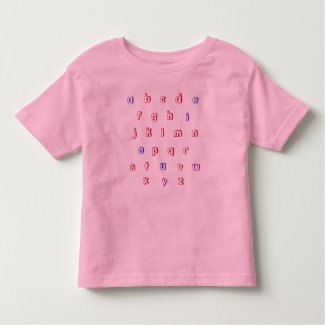
Of course, they don't have to color in the letters, they can just be fun to read and recite, to learn the order of the alphabet.
If you notice, the alphabet letters are shown in three different colors. The consonants are in red. The vowels are in blue. The crossover letters are in purple. Crossover letters are letters that sometimes act like a consonant, and sometimes like a vowel.
Most people are taught that the letter Y is sometimes a consonant and sometimes a vowel. Now Y has a pal; W.
W is also a crossover letter. The W acts like a consonant in the word - who. The W acts like a vowel, like a silent E in the word - flow.
Y can represent a variety of sounds. Y is a consonant in the word - yellow. Y acts like a long I in the word - fly, and like a long E in the word - baby.
A coloring alphabet shirt is a fun way to reinforce this concept. Teachers can wear alphabet shirts too.
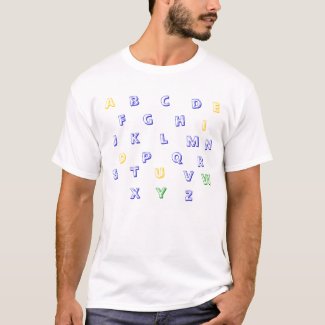
Whether you're ordering a shirt for a teacher and/or student, I recommend acrylic paint markers for fabric. to color them in. The paint markers are quite permanent, and it's pretty simple to apply. Be sure to place a sheet of flat cardboard between the fabric layers before doing any coloring or painting on the shirts.
Happy reading; and coloring.
Cheryl Paton
Cheryl Paton earns income from qualified purchases made through the links on this page.
Literacy and Phonetics - Making Reading Fun for Kids
Part of learning is to make it fun. My daughter loved reading before starting school. She loved being read to and was learning how to sound things out. She had favorite books and looked forward to more. When she started elementary school, the school had a Book It Reading Program. The kids were rewarded for reading a certain number of books, and she loved that too.
Then came a higher grade, and the school wanted the kids to do timed readings. Do you want to be timed while you read? Do you think that would be fun? Well I know that my daughter didn't. She was pretty quick at reading; she had been reading pretty fluently for her grade levels and beyond for a while. But having to be timed, took the fun out of it. Reading became a chore.
After that class was over, she eventually learned to put the fun back in, and began to enjoy reading again. If you have any kids in grades that are doing timed readings, you might want to have a chat with the teacher. It's more important to give kids a reason to read, than to time them. Talk to them a bit about what the book is about. Spark their interest in wanting to find something out. You can do this by asking the child about what they think will happen.
My daughter is has graduated from college now, and recommends that the kids keep a reading journal. The kids read for a block of time and then write a short summary; a couple of sentences about what they've read. She remembers doing this in first grade and enjoying that activity.
Having kids enjoy learning to read as kids, is a great way to create adults who also enjoy to read.
Having the child dictate their own stories is a great way to build reading skills. Find out more on Dictate a Story.
Cheryl Paton
Then came a higher grade, and the school wanted the kids to do timed readings. Do you want to be timed while you read? Do you think that would be fun? Well I know that my daughter didn't. She was pretty quick at reading; she had been reading pretty fluently for her grade levels and beyond for a while. But having to be timed, took the fun out of it. Reading became a chore.
After that class was over, she eventually learned to put the fun back in, and began to enjoy reading again. If you have any kids in grades that are doing timed readings, you might want to have a chat with the teacher. It's more important to give kids a reason to read, than to time them. Talk to them a bit about what the book is about. Spark their interest in wanting to find something out. You can do this by asking the child about what they think will happen.
My daughter is has graduated from college now, and recommends that the kids keep a reading journal. The kids read for a block of time and then write a short summary; a couple of sentences about what they've read. She remembers doing this in first grade and enjoying that activity.
Having kids enjoy learning to read as kids, is a great way to create adults who also enjoy to read.
Having the child dictate their own stories is a great way to build reading skills. Find out more on Dictate a Story.
Cheryl Paton
Tuesday, August 31, 2010
Phonetic Alphabet Book by Cheryl Paton, Letter C
Below is an example of what you'll find in The Phonics Guide: A guide to reading and spelling patterns.
Cc
C is the third letter of the alphabet. C is a consonant. C represents two main sounds; hard and soft, and can also be silent.
Hard C represents the same sound as the letter K does in the word kite. C represents its hard sound when it immediately precedes the vowels a, o, and u in the same syllable:
CA, CO, and CU as hard C
cat can cop cot cut cup
C also represents its hard sound before the consonants L, R, K, T, and sometimes H.
CL, CR, CK, CT, and sometimes CH as hard C
clang creek back act Christmas
(Note: The sound of hard C before the vowels e, i and y, is spelled with the letter K, as in keep, kite, and Kyoto.)
If the word is multi-syllable, and the hard C sound is heard at the end of a second or later syllable and it follows a vowel sound, that sound is usually spelled with IC:
IC
magic hectic optic fantastic music
Exceptions would be when a prefix is added, such as repack.
When the sound of hard C is heard right after a consonant, it is usually spelled with the letter K, as in bank. An exception is the work zinc. See more in Chapter Kk.
Soft C represents its soft sound, sounds like S as in sell, when it immediately precedes the vowels e, i, and y in the same syllable:
CE, CI, and CY as soft C
cent cedar cinema city cycle cylinder
When C is immediately followed by a silent e at the end of a single syllable, long vowel word, the C represents its soft sound.
Long Vowel + C + silent E, as soft C
face fleece slice twice juice
An exception is the word grocery where the C by itself sounds more like the /SH/ you hear in shall.
Note: For short vowel, single syllable words ending in a soft C sound, that sound is spelled with a double s, as in dress and grass. See more in Chapter Ss.
C is silent in the word czar.
C is paired with L and R for two common beginning consonant blends and the C is hard:
CL
class clean clip clock clue
CR
crab cream crisp crop crust
C is paired with the letters K and T for two common ending consonant blends:
CK
back deck brick dock duck
CT
fact perfect octopus duct
Note: C is usually paired with K at the end of a short vowel, single syllable word.
The CK pattern is also used at the end of the first syllable of a multi-syllable word when the vowel in the first syllable is short:
Short vowel + CK and in first syllable as hard C
package ticket locket trucker
Exceptions are the words tic and picnic. Note that there is also a word tick and that it has a different meaning than tic.
C is part of the CLE suffix which sounds like you’re saying cull at the end of the word.
CLE
cycle bicycle tricycle recycle
C is also part of the CAL suffix which sounds like you’re saying cull at the end of the word.
CAL
numerical geographical
C is commonly paired with H and the CH combination can represent one of four sounds.
CH can represent a single speech sound (a digraph) as in the word chew.
CH as a digraph
champ check chicken chop church
CH can also represent the /K/ sound as it does in Chris.
CH as /K/
Christmas choral chorus chrome
(Hint, when CH represents the /K/ sound, there is usually an R near by, but the R does not always mean the CH will sound like the /K/ sound, just that there is a good possibility.)
There are also some CH words where the CH represents the /K/ sound without any R nearby:
CH as Hard C without an R nearby
ache echo stomach
CH can represent a /KW/ sound as in choir. It sounds like the QU does in the word quarter.
CH as /KW/
choir
CH can also represent the /SH/ sound:
CH as /SH/
chef Chicago Cheryl Cher
C can be paired with I for two different sounds.
In the SCI pattern, the SC represents the soft C sound.
SCI as soft C
science
CI can also represent the /SH/ sound:
CI as /SH/
ancient efficient special proficient
A common spelling rule for C is I before E, except after C. This rule is true when the next vowel sound immediately after the C is long e, as in:
receive conceive ceiling
For other vowel sounds, the spelling is CI, as in:
ancient science efficient proficient special
Your feedback is welcome as this Phonetic Alphabet Book gets published in blog form. I will try to clarify anything you have questions about, and make it clearer. Thank you.
copyright Cheryl Paton
This book is being published a section at a time (by letter) on my blog, Phonetic Alphabet Book, and will eventually be published all together as a book.
Cheryl Paton
Cheryl Paton receives income from purchases made through links on this page.
Cc
C is the third letter of the alphabet. C is a consonant. C represents two main sounds; hard and soft, and can also be silent.
Hard C represents the same sound as the letter K does in the word kite. C represents its hard sound when it immediately precedes the vowels a, o, and u in the same syllable:
CA, CO, and CU as hard C
cat can cop cot cut cup
C also represents its hard sound before the consonants L, R, K, T, and sometimes H.
CL, CR, CK, CT, and sometimes CH as hard C
clang creek back act Christmas
(Note: The sound of hard C before the vowels e, i and y, is spelled with the letter K, as in keep, kite, and Kyoto.)
If the word is multi-syllable, and the hard C sound is heard at the end of a second or later syllable and it follows a vowel sound, that sound is usually spelled with IC:
IC
magic hectic optic fantastic music
Exceptions would be when a prefix is added, such as repack.
When the sound of hard C is heard right after a consonant, it is usually spelled with the letter K, as in bank. An exception is the work zinc. See more in Chapter Kk.
Soft C represents its soft sound, sounds like S as in sell, when it immediately precedes the vowels e, i, and y in the same syllable:
CE, CI, and CY as soft C
cent cedar cinema city cycle cylinder
When C is immediately followed by a silent e at the end of a single syllable, long vowel word, the C represents its soft sound.
Long Vowel + C + silent E, as soft C
face fleece slice twice juice
An exception is the word grocery where the C by itself sounds more like the /SH/ you hear in shall.
Note: For short vowel, single syllable words ending in a soft C sound, that sound is spelled with a double s, as in dress and grass. See more in Chapter Ss.
C is silent in the word czar.
C is paired with L and R for two common beginning consonant blends and the C is hard:
CL
class clean clip clock clue
CR
crab cream crisp crop crust
C is paired with the letters K and T for two common ending consonant blends:
CK
back deck brick dock duck
CT
fact perfect octopus duct
Note: C is usually paired with K at the end of a short vowel, single syllable word.
The CK pattern is also used at the end of the first syllable of a multi-syllable word when the vowel in the first syllable is short:
Short vowel + CK and in first syllable as hard C
package ticket locket trucker
Exceptions are the words tic and picnic. Note that there is also a word tick and that it has a different meaning than tic.
C is part of the CLE suffix which sounds like you’re saying cull at the end of the word.
CLE
cycle bicycle tricycle recycle
C is also part of the CAL suffix which sounds like you’re saying cull at the end of the word.
CAL
numerical geographical
C is commonly paired with H and the CH combination can represent one of four sounds.
CH can represent a single speech sound (a digraph) as in the word chew.
CH as a digraph
champ check chicken chop church
CH can also represent the /K/ sound as it does in Chris.
CH as /K/
Christmas choral chorus chrome
(Hint, when CH represents the /K/ sound, there is usually an R near by, but the R does not always mean the CH will sound like the /K/ sound, just that there is a good possibility.)
There are also some CH words where the CH represents the /K/ sound without any R nearby:
CH as Hard C without an R nearby
ache echo stomach
CH can represent a /KW/ sound as in choir. It sounds like the QU does in the word quarter.
CH as /KW/
choir
CH can also represent the /SH/ sound:
CH as /SH/
chef Chicago Cheryl Cher
C can be paired with I for two different sounds.
In the SCI pattern, the SC represents the soft C sound.
SCI as soft C
science
CI can also represent the /SH/ sound:
CI as /SH/
ancient efficient special proficient
A common spelling rule for C is I before E, except after C. This rule is true when the next vowel sound immediately after the C is long e, as in:
receive conceive ceiling
For other vowel sounds, the spelling is CI, as in:
ancient science efficient proficient special
Your feedback is welcome as this Phonetic Alphabet Book gets published in blog form. I will try to clarify anything you have questions about, and make it clearer. Thank you.
copyright Cheryl Paton
This book is being published a section at a time (by letter) on my blog, Phonetic Alphabet Book, and will eventually be published all together as a book.
Cheryl Paton
Cheryl Paton receives income from purchases made through links on this page.
Monday, August 30, 2010
Phonetic Alphabet Book by Cheryl Paton, Letter A
Below is an example of what you'll find in The Phonics Guide: A guide to reading and spelling patterns.
Aa
A is the first letter of the alphabet. A is a vowel.
A represents its short sound as in at and tap. A represents its long sound as in ate and cape.
Short vowel patterns for A include:
A followed by a consonant
Sam mat bag tap
AI as short A
plaid
AU as short A
laugh
Long vowel patterns for A are:
A, consonant, silent e as long A
same make plate grape wade
AI as long A
aim aid rain train grain
Note: The AI pattern represents three different sounds. The AI represents the short A sound in plaid, and the long A sound in aim, and also the short E sound as in the word said.
AY as long A
say pray lay stay may
Note: The AI pattern is found at the beginning or the middle of the word. The AY pattern is predominantly found at the end of the word. An exception is the word crayon.
Other vowel patterns that represent the sound of long A are:
EA as long A
steak break great
Note: The EA pattern can represent the sound for long A, short E, and long E. See the Alphabet section Ee.
EI as long A
vein
EIGH as long A
weigh weight freight neighbor
Note: The EI in the above words stands for the long A sound and the letters GH are silent.
EY as long A
they prey
Note: the EY pattern can also represent the long E sound as in key. See the Alphabet section Ee.
When A is paired with and immediately precedes the letter R, the A appears to be silent, as it sounds like you are just saying the letter name R:
AR
are car far star
When the letter E immediately follows the letters AR, then the ARE pattern can also sound like you are saying the word air:
ARE as the AIR sound
care share stare dare
A is also paired with IR, (AIR)
AIR
hair fair lair
A is also used in another pattern, representing a new sound; a dipthong, a blend of two vowel sounds in one syllable. Such a pattern is AU.
AU
cause pause August
Note that the AU represents the same sound that the AW represents in paws.
Your feedback is welcome as this Phonetic Alphabet Book gets published in blog form. I will try to clarify anything you have questions about, and make it clearer. Thank you.
copyright Cheryl Paton
Cheryl Paton
Cheryl Paton earns income from purchases made through links on this page.
Aa
A is the first letter of the alphabet. A is a vowel.
A represents its short sound as in at and tap. A represents its long sound as in ate and cape.
Short vowel patterns for A include:
A followed by a consonant
Sam mat bag tap
AI as short A
plaid
AU as short A
laugh
Long vowel patterns for A are:
A, consonant, silent e as long A
same make plate grape wade
AI as long A
aim aid rain train grain
Note: The AI pattern represents three different sounds. The AI represents the short A sound in plaid, and the long A sound in aim, and also the short E sound as in the word said.
AY as long A
say pray lay stay may
Note: The AI pattern is found at the beginning or the middle of the word. The AY pattern is predominantly found at the end of the word. An exception is the word crayon.
Other vowel patterns that represent the sound of long A are:
EA as long A
steak break great
Note: The EA pattern can represent the sound for long A, short E, and long E. See the Alphabet section Ee.
EI as long A
vein
EIGH as long A
weigh weight freight neighbor
Note: The EI in the above words stands for the long A sound and the letters GH are silent.
EY as long A
they prey
Note: the EY pattern can also represent the long E sound as in key. See the Alphabet section Ee.
When A is paired with and immediately precedes the letter R, the A appears to be silent, as it sounds like you are just saying the letter name R:
AR
are car far star
When the letter E immediately follows the letters AR, then the ARE pattern can also sound like you are saying the word air:
ARE as the AIR sound
care share stare dare
A is also paired with IR, (AIR)
AIR
hair fair lair
A is also used in another pattern, representing a new sound; a dipthong, a blend of two vowel sounds in one syllable. Such a pattern is AU.
AU
cause pause August
Note that the AU represents the same sound that the AW represents in paws.
Your feedback is welcome as this Phonetic Alphabet Book gets published in blog form. I will try to clarify anything you have questions about, and make it clearer. Thank you.
copyright Cheryl Paton
Cheryl Paton
Cheryl Paton earns income from purchases made through links on this page.
Phonetic Alphabet Book by Cheryl Paton, Introduction
When I was a literacy tutor for adults, I wanted to know what the rules were so that I could better answer my students' questions, such as, "Does a certain pattern always apply? If not, when doesn’t it." I found that as my students were learning more and more, that these were the kinds of questions that they wanted to know the answer to.
I found bits and pieces of information here and there, but nothing all in one place. So I decided to write The Phonetic Alphabet Book. I later decided on The Phonics Guide: A guide to reading and spelling patterns, as the title. The link will take you to Amazon where it can be purchased.

This book is set up alphabetically, giving many rules and common letter combinations for all the letters of the English alphabet.
For continuity and ease of location, when I am talking about a particular letter or combination of letters, I will use their capitals. When a letter is enclosed by the back slash marks, /B/, then that represents the sound of the letter and not its letter name.
Cheryl Paton
Cheryl Paton receives income from qualifying purchases made through links on this page.
I found bits and pieces of information here and there, but nothing all in one place. So I decided to write The Phonetic Alphabet Book. I later decided on The Phonics Guide: A guide to reading and spelling patterns, as the title. The link will take you to Amazon where it can be purchased.

This book is set up alphabetically, giving many rules and common letter combinations for all the letters of the English alphabet.
For continuity and ease of location, when I am talking about a particular letter or combination of letters, I will use their capitals. When a letter is enclosed by the back slash marks, /B/, then that represents the sound of the letter and not its letter name.
Cheryl Paton
Cheryl Paton receives income from qualifying purchases made through links on this page.
Subscribe to:
Posts (Atom)