Cheryl Paton shares tips about literacy, mainly helping adult reading students.
Find other literacy news and tips on my Facebook page. www.facebook.com/LiteracyIdeas/
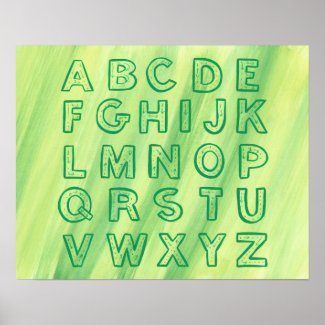
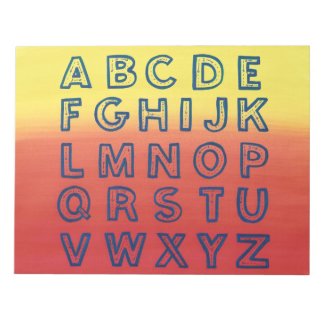
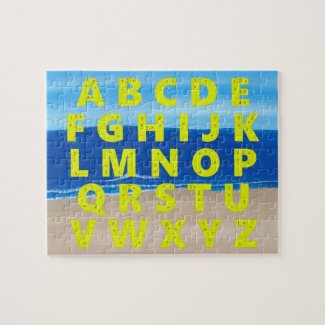
Here you will find simple alphabet charts that can be used for adults. You can choose from posters, notepads, and puzzles.
These charts have an artistic background to offer some visual interest. There are direction arrows on the letters to guide your students in the mechanics of writing each letter. Students can follow the arrows on each letter with their finger, and also use the chart for copying the letters onto paper.
This first chart features the upper case letters done with green outlines of the letters on a blended yellow and green background.
I wanted to use something that adults can enjoy looking out while they are learning and practicing how to write the upper case letters. This one is printed on posters.
This design features an ombre sunset design, with blends of yellow, orange, and red. It is shown here on 40-page notepads. Students can trace the letters on the notepad multiple times.
The third design features a beautiful beach scene with a blue ocean. This design is shown on jigsaw puzzles, for some added fun. Sometimes its nice to do some learning in a less focused way. It can be a great reinforcement activity.
I have been a literacy tutor for adults, first as a volunteer, and then I was in private practice, for a total of over twelve years. I have learned more about what various adult students actually want, and what helped them the most.
First, there are many different levels of literacy. Some students may know quite a bit of sight words, others may know some sounding out skills, and some may be total beginners.
Some students may have specific goals in mind. One of my clients planned to hike from one state to another, and only wanted to learn enough about plants to know which ones were safe to eat.
Whatever their skill level, or goal, I found hands on activities to be very helpful. The clients/students need something to help reinforce what they are learning and that also augment their goals.
As with any type of learner, whether child or adult, people can have different learning styles. Some may be more visual learners, others more auditory, etc. If you are tutoring your adult student one on one, you can tailor the lessons more to their individual learning style. However, I have found that it is a good idea to offer a variety of activities that can enhance a different type of focus. The different types of focus can help to reinforce and build learning across the board.
Word Search and Crossword Puzzles can be Custom Made for Specific Letter Patterns
Searching for words in a mixed up group of letters can help with both individual letter recognition, and also recognition of words that are out of context. I used to shop around trying to find word search books that were more appropriate for adults. I did find some that were more suitable at a Teacher Resource store.
However, once I found out that I could make my own tailored puzzles to a specific letter pattern, and or specific words, it was so much more helpful and convenient. I could tailor the word searches to each specific student's needs and wants. The program that I used is no longer available, but a search online will probably help you find a more current option.
My adult students liked doing the word search puzzles and also fill in the blanks. I had my students do these in between the one on one lessons as well, as homework. I made up sentences on my computer and printed them out for my students.
Learning for adults can also involve fun and games.
Every lesson doesn't have to be at a desk or table.
I had a client who wanted more responsibility in his work. I provided him with a clipboard for his paper, so that he could write down basic notes while touring the training facility. That really enhanced his interest.
Both phonics and sight words are important.
Phonics is using the known sounds that the individual letters represent, in sounding/figuring out what the word is.
Sight words are simply taught as recognition words. For instance, for most students, their name is usually taught as a sight word, before any instruction of phonics is given. The word STOP on the stop sign is a great word to teach as a sight word without the student having to know what sounds the letters represent. I had a an adult literacy student who didn't drive, but did ride a bike. Recognizing various signs and going over right of way laws were very helpful to him.
Sight words can be a good place to start. It helps to build a sense of mastery, quickly. Flash cards are a great way to teach and reinforce word recognition. - Learning phonics helps the students decipher new words.
You can also make your own flashcards.
You can design flashcards online, using an image of yours that is stored on your computer. Then use the onlime template fields to custom design the flashcard(s).
Older students are probably interested in different activities, than the younger students, i.e. the type of movies, novels, etc.
Using themes that your student is interested in, will aid in their learning. You and/or you and your student can make custom flash cards. Either one can draw or cut out pictures from magazines to add on index cards.
You can also purchase custom flash cards at my CustomFlashCards store on Zazzle: www.zazzle.com/store/CustomFlashCards. There are different catgegories to choose from there, i.e. family members, adverbs, nouns, etc. Each flashcard has text on one side that can be customized, and a placeholder for an image on the other side. You can also submit design requests there. There are quantity discounts, even with ordering a variety of different flashcards.
Do you have any other ideas? You can share them in a comment below.
My college age daughter was doing some research on literacy and found out that boys weren't doing as well in reading. It was reported that the problem was that the reading materials that were presented to them in school wasn't that interesting to them.
Yes, I know that reading materials in the schools may not be all that interesting to anyone. The key is that we want to keep our kids learning and reading; it will help them so that they can be literate adults.
If the school isn't providing interesting reading materials, find out what your kids are interested in, and provide them with some books that are appealing to them. If they aren't really interested in "books", check out comic books and/or song lyrics. Perhaps they'll want to sing along to their favorite artists. A karaoke machine can be used for learning activities and birthday fun too!
Have them dictate a story to you, write their words down, and then read the words back to them. Then have them read their story back to you.
If they are also writing, reverse the roles, and dictate a story to them and have them write it down and then read the story back to you. It can be a made up story, and or an experience story, or about something that they would like to do, or have, and tell why.
Change things up a bit by having them write with a paint brush. Get some poster board or larger paper so that they can write l a r g e.
You don't have to do all of the above; the idea is to provide some fun reading activities that are outside of the school environment that is just for fun.
If you have any other ideas, please share in a comment below.
Both adult literacy students and English as a Second Language students can benefit from a picture dictionary for adults.
Pictures help to convey what your are saying, reading, and can help to jog the student's memory. They can also give students an image to help them explain what they are talking about.
Picture dictionaries for adults usually include quite detailed scenes and images that reflect the adult life. There are images of jobs, shopping, driving, sports, etc. There are many action verbs that are demonstrated in these types of scenes.
When I was working with various ESL students, they could point to a picture to show me what it was they were wanting to know about. Some of my ESL students could easily decipher words and "read" but didn't know what all the words actually meant. The picture dictionary was a big help, and I didn't have to act out a lot of charades.
The Oxford Picture Dictionary has a lot of scenes and situations that covers a wide range of activities that are relevant for the adult literacy student.
It also has forms that adults may have to fill out, such as school registration. (The version that I had before, had forms, I see that a new version is out, so hopefully, it also shows forms too.)
If you are a tutor, the scenes can also be used for conversation starters, writing activities, spelling activities, and more. This book is pretty comprehensive.
If you want a picture dictionary that is smaller and lighter weight, then I recommend the The New Oxford Picture Dictionary (English-Spanish Edition). Although it also includes the Spanish translation, it can be used by English speaking adult students too. It is not as comprehensive as the above dictionary, but still includes a lot of pictures and scenes to help with your adult literacy students.
Cheryl Paton
Cheryl Paton is an Amazon affiliate and earns income from qualifying purchases made through links on this page.
I was a literacy tutor for adults for twelve plus years and I'll be sharing some some of my tips for both literacy tutors and students. May you find something helpful and useful here.
Literacy and phonics go together. Although many words cannot be decoded using phonics alone, most words can.
Knowing common sight words lays a great foundation and should be included in any literacy program.
Knowing common rules for letter sounds and common letter patterns is a good basis for sounding out new words.
Most letters only represent one sound. Some letters represent two or more sounds. For example, the letter X represents four sounds. Sometimes a letter is actually silent, or changes the sound it represents when it's combined with different letters. The letter C represents the hard sound in the word car, and the soft sound in the word cent. Here is some basic info to help you out.
It's okay to start with little words.
Small words, such as cat, may be considered baby words by some people. However, by understanding that the letters CA in cat represent the same sound that starts the word Cathy can be a big help in sounding out the word Cathy.
Also knowing that the letter C, when immediately followed by the letter A in the same syllable, will represent the same sound that the letter K represents, is an extra plus.
Whereas the letter C immediately followed by the letter I in the same syllable, as in city, represents the same sound as the letter S does in the word silly.
Any size word is made up of common letter combinations. Multiple letter groups added together make bigger words, called multi-syllable words.
Understanding and recognizing smaller letter patterns can be helpful in decoding and sounding out larger multi-syllable words.
Some basics on vowels and syllables and when W and Y act like vowels:
There are five letters in the English language that are always vowels: A, E, I, O, and U. Vowels can be long, which means that they say their name; be short and represent a more breathy sound; or they can be paired with other vowels to represent a new sound.
The letters W and Y can also act like vowels depending on the word that they are in, and their location in the word. Y acts like a silent E in the word play; like a long E, as in the word silly; and as a long I, as in the word byte. W acts like a silent E, as in the word grow.
In the English language, the majority of syllables, at least 99.9% of them, have a vowel in them. One exception that I know of is the word rhythm, in which there are two syllables and only one vowel.
Other than the word rhythm, there will normally be at least one vowel in each syllable and up to three. Your jaw will drop with the voicing of each new syllable. (Place your hand under your chin and say a word. How many times did your jaw lower? That will tell you how many syllables are in that word.)
Some Basics on Consonants:
There are 19 letters that are always consonants, B, C, D, F, G, H, J, K, L, M, N, P, Q, R, S, T, V, X, and Z. There are 21 when counting the letters W and Y, which sometimes act like consonants and sometimes act like vowels.
Most consonants are usually known for a specific sound: B, D, F, H, J, K, L, M, N, P, Q, R, T, V, and Z, with only a few exceptions.
Three consonants can also represent a hard or soft sound; they are C, G, and S. The C can be hard as in the word cat or soft as in the word city. The G can represent its hard sound as in the word go, or its' soft sound as in the word gel. The S can represent its hard sound as in the word seal, or its soft sound as in the word rise, in which the S sounds like the Z sound. See more below under General Spelling/Phonics Rules.
The X represents four sounds. X sometimes represents the Z sound as in xylophone, says its name as in x-ray, sounds like the K sound as in tuxedo, or the CKS sound as in fox.
B, K, and W are also sometimes silent, like in the words: climb, knew, and wrap.
Alphabet Sounds:
Here are the basic consonant and short vowel sounds. Please note that some of the consonant sounds here include a short vowel sound after the consonant sound. As best you can, leave the vowel sound off when making the consonant sound by itself. The vowel sound will change depending on the actual vowel that follows the consonant in a word. For example, the vowel sound in the word cup sounds different than in the word cap. But they both start with the sound of /k/.
I do think that it is easier to learn phonics when you have something or someone to listen to as the various sounds are given when the letter is being shown.
If you are a tutor, or a literacy student who already knows quite a bit of the basics, then I recommend The Phonics Guide: A Guide to Reading and Spelling Patterns, to use as a reference book. Any letter and or letter pattern can be looked up alphabetically, and examples and rules are given for each one.
First off, all the spelling and phonics rules are 'usually' true. There can be exceptions. The rules may also only apply to small words and/or individual syllables. Remember that small words and/or syllables are put together to make longer, multi-syllable words.
Short Vowels - A single vowel followed by a single consonant is usually short, as in bag.
Silent E or Long Vowels - A single vowel followed by a single consonant and the vowel E, is usually long, as in cake.
Two vowels together - When two vowels are between two consonants, the first vowel is usually long and the second vowel silent, as in boat.
Silent B - The letter B is silent when it is at the end of the word and following the letter m, as in crumb, pronounced crum with a short U. Note that the sound for B is heard in the word crumble, and that the letter B actually starts the syllable BLE at the end of the word.
Hard C Sound - C represent the same sound that the letter K does, sound when it is followed by the vowels A, O, or U, as in cat, cob, and cut.
Soft C Sound - C represents the same sound that the Hard S does when it is followed by the vowels E, I, or Y, as in cent, city, and cyan.
Hard G Sound - G represents its hard sound when it is followed by the vowels A, O, or U, as in gap, got, and gum. It can sometimes represent its hard sound when it is followed by E or I, as in get and give.
Soft G Sound - G usually represents its soft sound (sounds like a J) when it is followed by E, I, and Y, as in gem, gibe, and gym.
Silent K - The letter K is silent when it is paired with and precedes the letter N in a word or syllable, as in knee.
Hard S - S represents its hard sound when it is at the beginning of a word and not followed by H, as in seal.
Soft S - S usually represents its soft sound, sounds like the Z in haze, when it comes at the end of a word or syllable and when it comes between two vowels, as in has and praise. Some common exceptions to S on the end of the word are bus and this.
Silent W - The letter W is silent when it is paired with and precedes the letter R, is in write.
W is a crossover letter. - W can also act like a silent e when it follows a vowel as in grow.
X represents four sounds. - X says its name in the word x-ray. The sound of X sounds like a Z in the beginning of other words, as in xylophone. The sound of X at the end of most syllables and words sounds like the sound of CKS, as in fox. Now say the word docks. X also represents the sound of K as in the word tuxedo, pronounced tuk-see-doe, with a short u, long e, and long o.
Y is a crossover letter. - Y is a consonant when it is at the beginning of a word or syllable, as in yellow; but acts like a vowel when it's in the middle or at the end of a word or syllable as in symbol and ably.
Here is a video that goes over the various sounds that different letters represent. It goes over the letters that represent single sounds, as well as letters that represent multiple sounds. There are also lessons to help practice.
Sometimes a letter pattern will also represent different sounds. Such as EA. The E in the word lead is long; it says it name and the A is silent. Lead rhymes with seed. The E in the word bread is short; bread rhymes with bed.
This is not to overwhelm you, but just to let you know that sometimes you also might need to use context clues to help you decipher a new word until you become familiar with that particular word. It's good to have a reference book or notes to help you as you are learning.
For a book that goes over various spelling patterns and also has lesson plans, then I recommend The Spelling Teacher's Lesson a Day book. It features lessons on homophones (words that sound alike), silent letters, contractions, prefixes, and more. It can be used by teachers in classrooms, for homeschooling, for ESL students, tutors, and parents. It has 256 pages.
The Phonics Guide: A Guide to Reading and Spelling Patterns lists various common letter patterns, along with common spelling rules, alphabetically. It is a reference book to help reinforce the student's learning, and can also be used as a guide for what to cover for tutors. It has 104 pages.
Take it a step at a time.
Letters and letter patterns make up words.
The letters include vowels and consonants.
Vowels can be long, say their name, or short.
Phonics are the sounds that the letters represent.
Longer words are made up of syllables.
Understanding phonics helps the reader to decipher both short and long words.
Teaching phonics to adults is different, in most cases, than teaching phonics to children. Adults, for the most part, already have a wide vocabulary and know how to say what they want. Some may also have a great recognition of numerous sight words, and others, not so much.
From my own experience of working with adult literacy students, adults who need and want to improve their literacy skills, usually also need to improve their decoding skills. They need help in learning letter patterns, and recognizing them, so that they can decode words on their own. Sometimes context isn't enough to help the learner figure out a new word; sometimes words are shown without any context.
Helping learners to recognize letter patterns can help them decode words by letter pattern recognition.
In The Phonics Guide, various common spelling patterns and letter combinations are listed alphabetically, enabling the student to more easily find a specific letter pattern, blend, etc., once they know the alphabet.
This guide can be used by both tutors and students. Tutors can refer to various letters patterns and general rules, to help formulate their lesson plans. Students can use this book to help them see examples, and to reinforce the patterns and common spelling rules that they are learning.
Below is a sample page:
Tutors will have examples at their fingertips to help explain the current letter pattern that they are teaching.
Learners will see examples of common letter patterns along with some illustrations to help them remember the sound that a particular pattern represents. They will be able to look up common letter patterns, i.e. blends, alphabetically. It's a great resource for students to use in between lessons.
It gives them answers to questions that they may be asking, such as, When does the letter Y sound like I? The instructor can easily answers these questions during a lesson, and the guide helps to reinforce it when the students need backup learning in between the lessons. It gives the students another aid in becoming independent readers and learners.